This is an AI-generated research project, still being refined. It may contain errors. Reader ratings and feedback are coming soon. How this is made
For Arabic speakers
Your English has a Arabic shape. Here is
where.
Arabic uses the back of the mouth and throat much more actively than English does. At rest, the tongue root sits a little farther back, and speakers regularly narrow the throat (pharynx) to produce guttural and 'emphatic' consonants that don't exist in English.
The Arabic comparison is being researched. Daily tips are available.
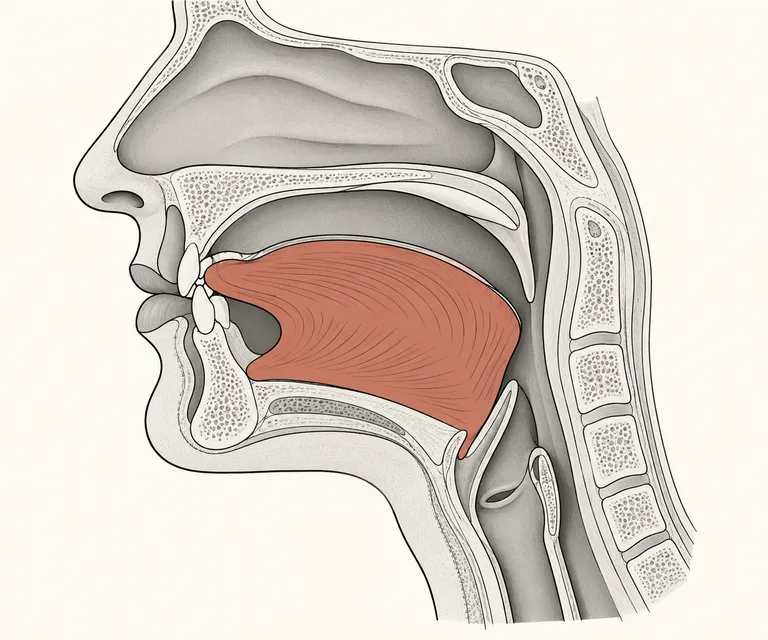
Plain consonant settingSide cross-section showing a neutral tongue-root position with an open pharyngeal space, tongue tip near the alveolar ridge.
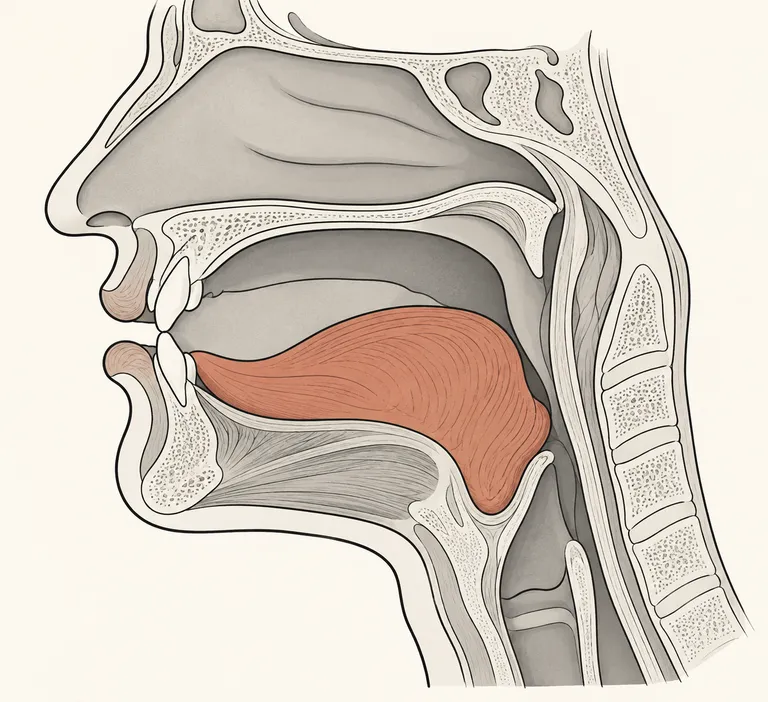
Emphatic/pharyngeal settingSame cross-section but with the tongue root pulled back and the pharynx visibly narrowed, tongue body lowered and bunched slightly toward the back.
A side view contrasting a plain consonant's open throat with the narrowed, pulled-back tongue-root posture used for Arabic's emphatic and pharyngeal consonants, a constriction English speakers rarely produce.
How Arabic moves
sourced
Arabic stress is quite predictable, landing on heavier syllables (ones with long vowels or closed by a consonant), and stressed syllables are clearly longer and louder. Unlike English, though, unstressed vowels keep their full quality instead of shrinking to a quick 'uh' sound, so Arabic-accented English often gives unstressed syllables more weight than native listeners expect, making speech sound very evenly and fully pronounced throughout.
Where Arabic rests
sourced
Arabic uses the back of the mouth and throat much more actively than English does. At rest, the tongue root sits a little farther back, and speakers regularly narrow the throat (pharynx) to produce guttural and 'emphatic' consonants that don't exist in English. This gives Arabic a fuller, sometimes tenser, more resonant sound around certain consonants. The lips stay fairly neutral rather than spreading into a smile shape, and the velum stays raised for most speech, opening only for a few nasal sounds. Because of this deep throat activity, Arabic speakers learning English may bring extra tension or a subtle 'pulled-back' quality to sounds near where Arabic emphatics or gutturals would be, and may need practice relaxing the throat for typical English consonants.
Modern Standard Arabic (MSA) as the reference variety, with notes on Egyptian, Gulf, and Levantine colloquial variation in emphatics and vowel realization