This is an AI-generated research project, still being refined. It may contain errors. Reader ratings and feedback are coming soon. How this is made
For German (Standard German / Hochdeutsch) speakers
Your English has a German (Standard German / Hochdeutsch) shape. Here is
where.
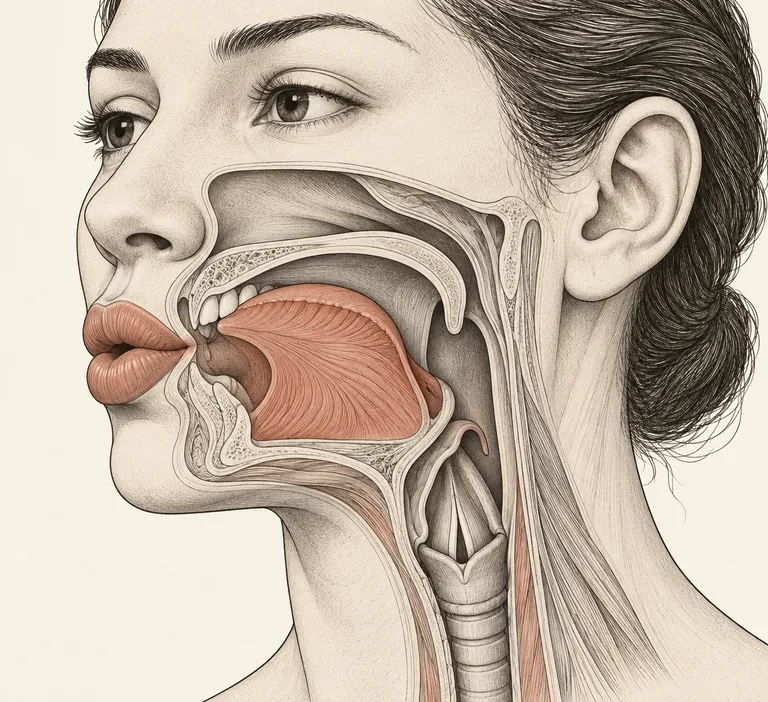
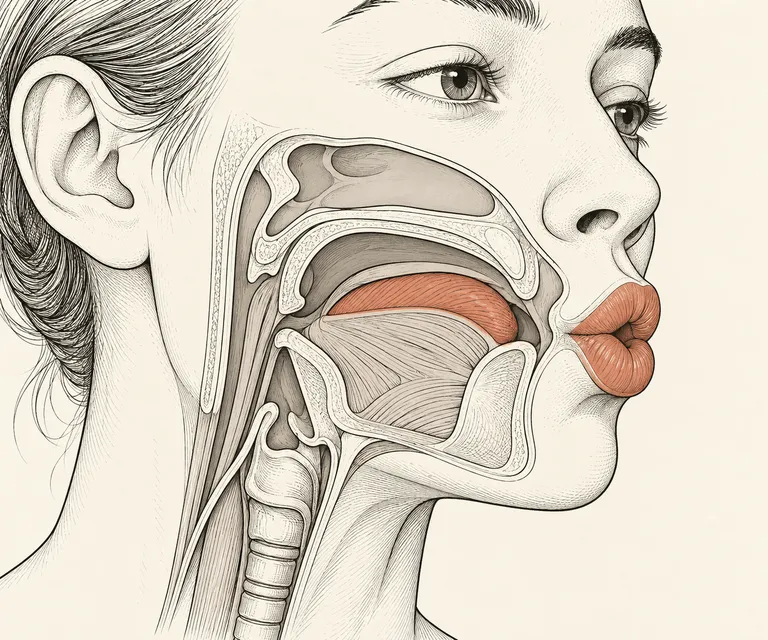
German speech carries a bit more overall muscular energy in the mouth than relaxed American English. The lips work harder and round forward for vowels like ü and ö, which don't exist in English, and the tongue sits a little higher and more forward, ready for frequent front-vowel and alveolar sounds.
The German (Standard German / Hochdeutsch) comparison is being researched. Daily tips are available.
Rest positionNeutral face at rest: lips gently closed, jaw relaxed but poised, tongue tip near the alveolar ridge.
Front rounded vowel (ü/ö)Lips pushed forward into a rounded shape while the tongue stays fronted and raised, illustrating a mouth posture with no equivalent in English.
German speech uses more active, rounded lip postures for vowels like ü and ö, which don't exist in English, plus crisp glottal 'restarts' before vowel-initial words — together giving German-accented English a tighter, more clipped articulatory feel.
How German (Standard German / Hochdeutsch) moves
sourced
Like English, German is stress-timed: strong syllables get more time and energy while weak syllables shrink and often reduce to a quick 'uh' sound. This shared rhythmic backbone makes German speakers' English pacing feel fairly natural, though the stressed syllables can land with extra emphatic weight, and word-final consonants may come out crisper and more clipped than in relaxed American speech.
Where German (Standard German / Hochdeutsch) rests
sourced
German speech carries a bit more overall muscular energy in the mouth than relaxed American English. The lips work harder and round forward for vowels like ü and ö, which don't exist in English, and the tongue sits a little higher and more forward, ready for frequent front-vowel and alveolar sounds. Word beginnings that start with a vowel often get a small 'reset' click in the throat (a glottal stop), which makes speech sound crisply segmented rather than smoothly linked. Endings of words are also produced with more decisive, tighter closures, partly because voiced consonants like b, d, and g turn voiceless at the end of a syllable. All together, the setting feels tenser and more front-focused than the looser, more back-relaxed posture of General American English.
Standard German (Hochdeutsch), the educated/broadcast norm used across Germany, Austria, and Switzerland; regional accents vary in rhotic and vowel quality but share the core system described here.