This is an AI-generated research project, still being refined. It may contain errors. Reader ratings and feedback are coming soon. How this is made
For Greek speakers
Your English has a Greek shape. Here is
where.
At rest, Greek speakers keep the jaw and lips fairly relaxed and neutral, without much spreading or rounding. The tongue sits centrally, moving forward and back evenly since Greek vowels keep their full, clear quality whether stressed or not.
The Greek comparison is being researched. Daily tips are available.
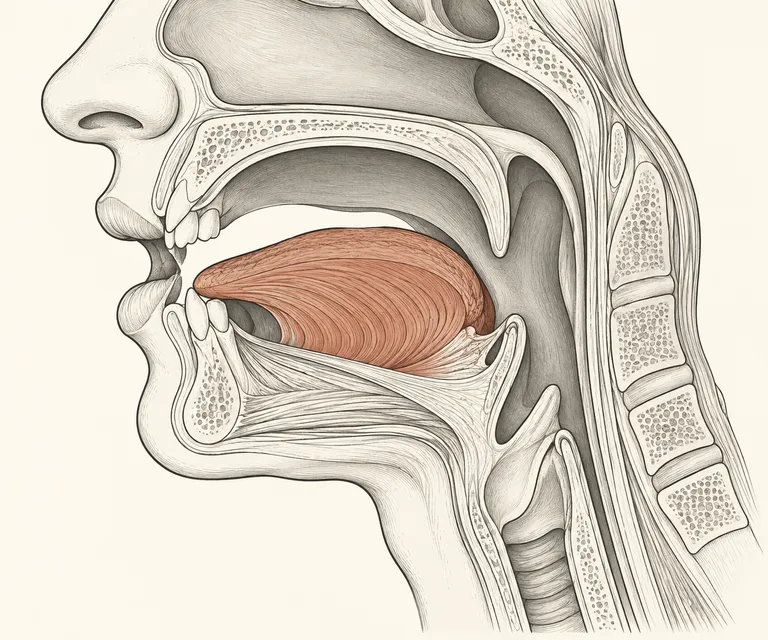
Resting positionJaw relaxed and moderately open, tongue centered and level, lips neutral, throat open and untensed.
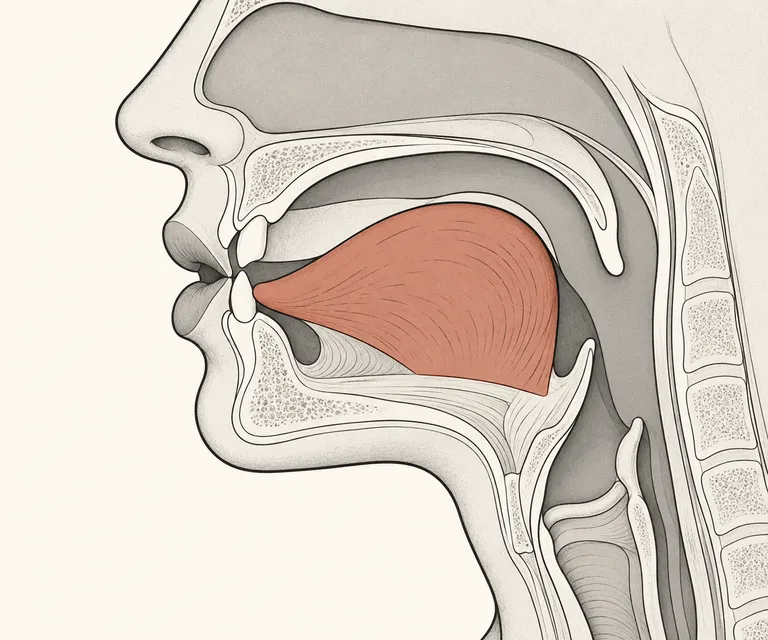
Mid-vowel articulation (e.g., as in 'e' or 'o')Tongue shifts smoothly to a clear, full vowel position without reducing toward the center, lips showing mild rounding for back vowels, even muscular effort visible across the mouth.
Side view contrasting the relaxed Greek resting posture with the even, full-vowel articulation that gives Greek its steady, syllable-timed feel.
How Greek moves
consensus
Greek is generally syllable-timed, meaning each syllable tends to take up roughly the same amount of time regardless of stress, unlike the uneven, compressed rhythm of English. Vowels keep their full quality even when unstressed, so the beat feels more even and steady compared to the stretch-and-squeeze rhythm of stress-timed languages like English or Dutch.
Where Greek rests
consensus
At rest, Greek speakers keep the jaw and lips fairly relaxed and neutral, without much spreading or rounding. The tongue sits centrally, moving forward and back evenly since Greek vowels keep their full, clear quality whether stressed or not. There's little of the throaty tension found in some neighboring languages; airflow through the throat stays smooth and open. Because every syllable tends to get nearly equal articulatory effort, the muscles work in a steady, even way rather than in bursts of tension. Voice quality is typically clear and resonant, with a moderate, consistent level of tension spread evenly across the mouth rather than concentrated in one area, giving Greek speech its steady, rolling feel.
Standard Modern Greek (Νέα Ελληνικά); notes apply broadly across regional varieties, with Northern dialects showing more unstressed-vowel reduction/raising than Southern/Standard speech