Aspiration
You likely pronounce English p, t, and k the same unaspirated way you do in Hungarian, releasing straight into the vowel without any extra puff of air, even at the start of a stressed syllable like in 'Peter' or 'top'.
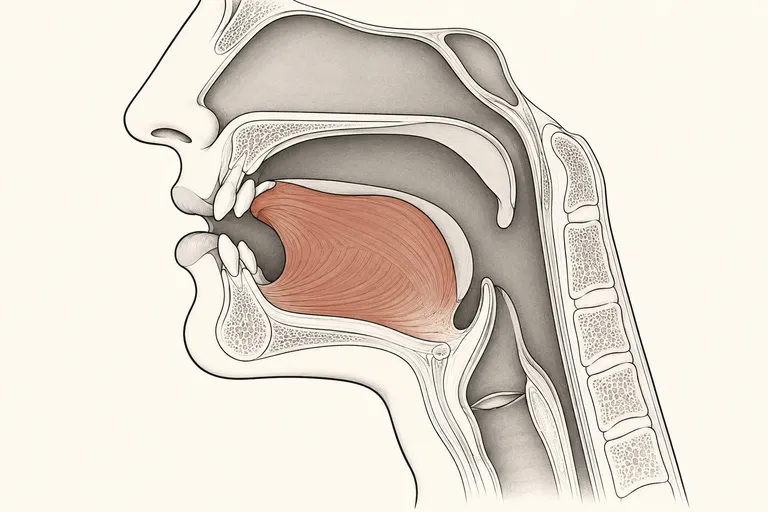
What you probably do
You likely pronounce English p, t, and k the same unaspirated way you do in Hungarian, releasing straight into the vowel without any extra puff of air, even at the start of a stressed syllable like in 'Peter' or 'top'.
How natives do it
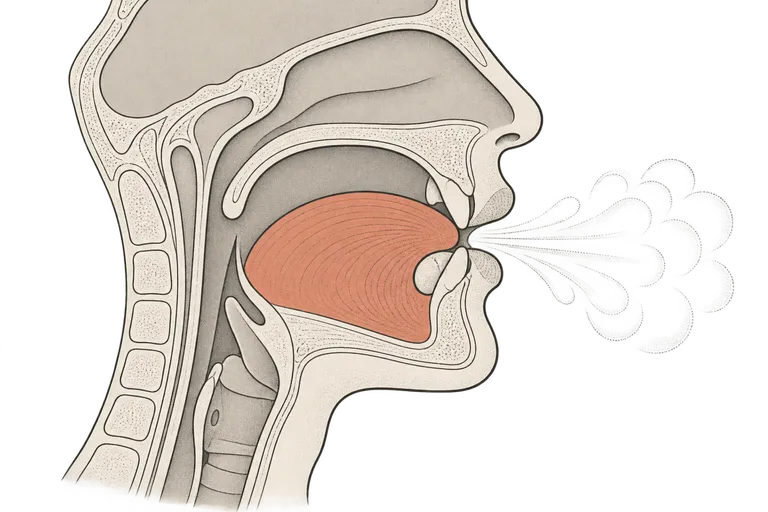
Americans add a clear burst of air right after releasing p, t, or k when it begins a stressed syllable, so there's an audible puff before the vowel starts — try holding a tissue near your mouth and feeling it move on 'pea' but not on 'spy'.
Why it matters
Because aspiration is one of the main cues English listeners use to tell p/t/k apart from b/d/g, skipping it can make 'pin' sound like 'bin' or 'time' like 'dime', even though you meant the voiceless sound all along.
How the mouth differs
Hungarian voiceless stops p, t, k are produced without aspiration in all positions — there is no strong burst of air after release. English aspirates these same stops strongly when they start a stressed syllable (as in 'Peter', 'top', 'cat'), releasing a clear puff of air before the vowel begins, while leaving them unaspirated after s (as in 'spin', 'stop', 'skip').
Listen for the pattern
Producing English p, t, k without the expected aspiration in stressed positions can make them sound perceptually closer to b, d, g to American listeners, occasionally causing words like 'pin' and 'bin' to blur together.
Try these sentences
- Peter poured the tea into two cups.The stressed initial p's and t's in 'Peter', 'poured', 'tea', and 'two' carry an audible puff of air in English.
- Kate's cat kept the key.Aspirated k's at the start of stressed syllables stand out clearly against unaspirated k's elsewhere.
Reader ratings and feedback are coming soon.
Sources (1)
- Prof John C. Wells_Workshop: Questions and Answers onEnglish...
- The content identifies core phonetic features relevant to accent analysis, including tonal patterns (High Fall, Fall-Rise) and articulatory phenomena (aspiration, clipping, glottal stop).
- It references John C. Wells' 'Accents of English' as the primary theoretical source for understanding English accent variation.
- The material targets early English teaching and learning contexts by highlighting specific tonicity and syllabification rules.