Yes/no question intonation
You may end English yes/no questions with a sharp rise followed by a fall on the last syllable, following the Hungarian question melody, which can make the question sound finished or flat rather than genuinely…

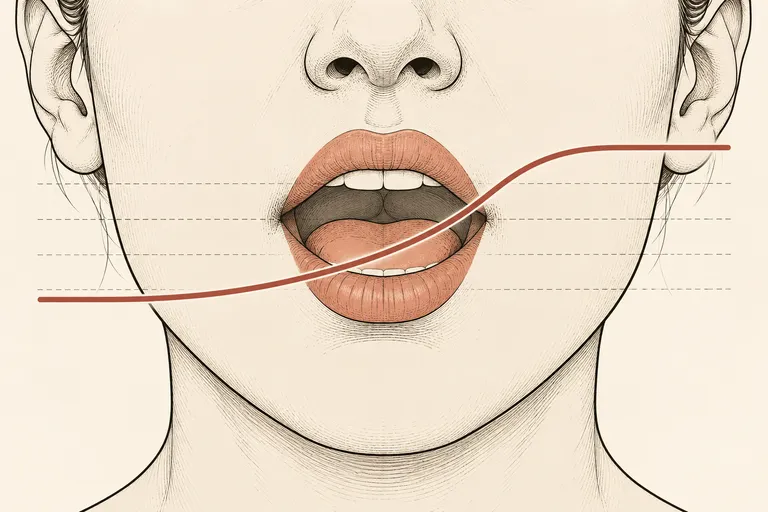
What you probably do
You may end English yes/no questions with a sharp rise followed by a fall on the last syllable, following the Hungarian question melody, which can make the question sound finished or flat rather than genuinely open-ended.
How natives do it
Americans typically let the pitch keep climbing all the way to the end of a yes/no question, without dropping back down, so the very last syllable is often the highest point of the whole sentence.
Why it matters
Because the final fall is such a strong cue in Hungarian, using it in English yes/no questions can make listeners think you've made a statement rather than asked a question, leading to confused or delayed responses.
How the mouth differs
Hungarian yes/no questions use a distinctive rise-then-fall shape: a sharp pitch rise on the second-to-last syllable, followed by a fall on the very last syllable. English yes/no questions typically just rise continuously toward the end, without the late falling tail.
Listen for the pattern
Applying the Hungarian rise-then-fall pattern to English yes/no questions can make them sound like statements or even slightly abrupt to Americans, since the expected rising melody gets cut off by an unexpected final fall.
Try these sentences
- Are you coming to the party?Pitch keeps rising toward the end and stays up through 'party', unlike Hungarian's rise-then-fall shape.
- Did you finish the report?A sustained or rising final pitch signals a yes/no question in English, rather than a sharp rise followed by a fall.
Reader ratings and feedback are coming soon.
Sources (1)
- Prof John C. Wells_Workshop: Questions and Answers onEnglish...
- The content identifies core phonetic features relevant to accent analysis, including tonal patterns (High Fall, Fall-Rise) and articulatory phenomena (aspiration, clipping, glottal stop).
- It references John C. Wells' 'Accents of English' as the primary theoretical source for understanding English accent variation.
- The material targets early English teaching and learning contexts by highlighting specific tonicity and syllabification rules.