/t/, /tʰ/, /ɾ/as in top
You likely produce a full, dental t in every position, the same crisp sound whether it's at the start of a word or between two vowels, without aspirating it strongly or softening it between vowels.
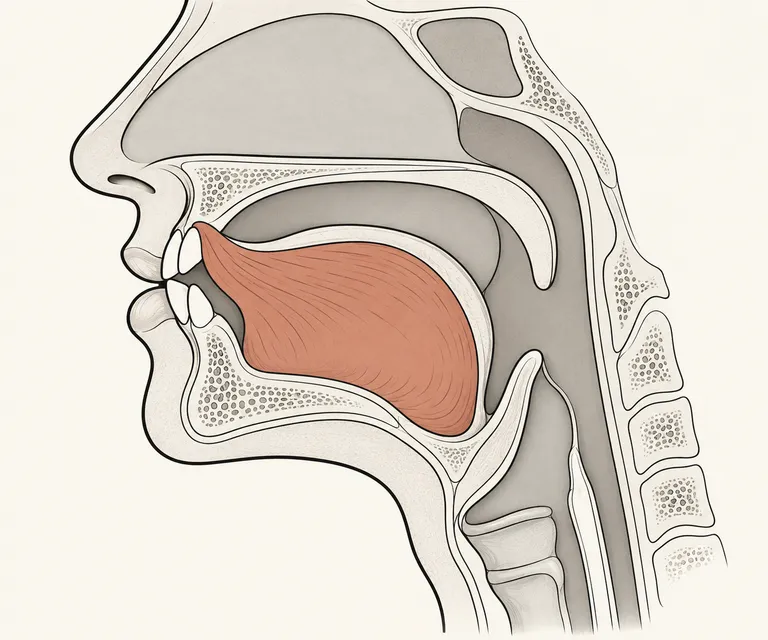
What you probably do
You likely produce a full, dental t in every position, the same crisp sound whether it's at the start of a word or between two vowels, without aspirating it strongly or softening it between vowels.
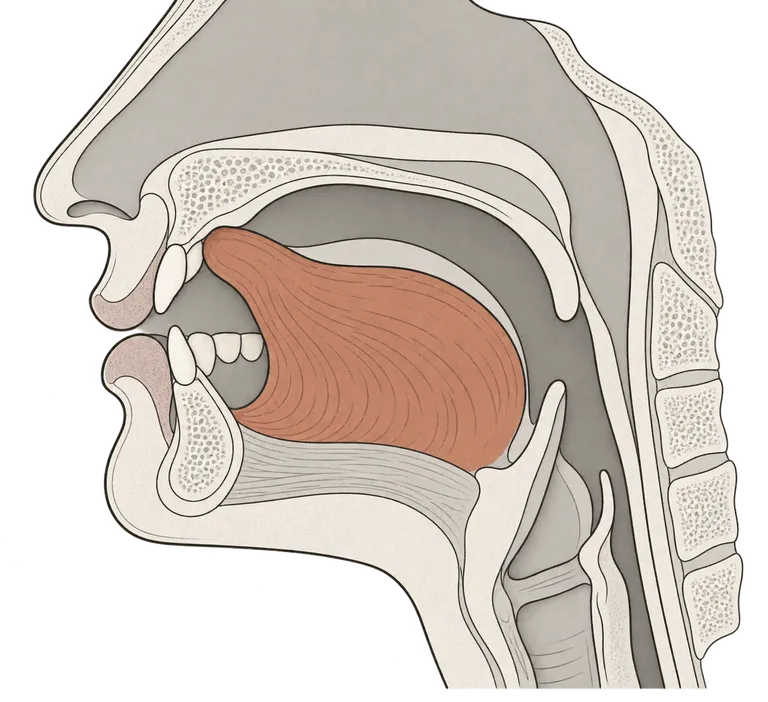
How natives do it
Americans move the tongue tip slightly back to the alveolar ridge, add strong aspiration at the start of stressed syllables like 'top', but turn the same sound into a very quick, light voiced tap between a stressed and unstressed vowel, as in 'butter' and 'city' — almost like a fast 'd'.
Why it matters
A uniformly crisp t in every position is understood but sounds overly careful and formal to American ears, since natural connected speech relies on this flapping pattern constantly. Learning both the aspirated and flapped versions makes everyday words like 'water' and 'little' sound relaxed and native.
Hear the difference
Words this touches
Hungarian speakers often substitute /t/.
How the mouth differs
Hungarian t is a dental or denti-alveolar stop with minimal aspiration and no contextual weakening; it stays a full stop in every position. English t is alveolar rather than dental, is strongly aspirated at stressed syllable onsets, but is frequently reduced to a quick voiced tap (flap) between a stressed and unstressed vowel, as in 'butter' or 'city', and may be glottalized before a syllabic nasal, as in 'button'.
Listen for the pattern
Keeping a full, unaspirated dental stop in every context, as Hungarian does, is understood but sounds noticeably formal or foreign to American ears, since natural casual speech relies heavily on flapping and aspiration contrasts that Hungarian's uniform t does not have.
Reader ratings and feedback are coming soon.
Sources (2)
- Prof John C. Wells_Workshop: Questions and Answers onEnglish...
- The content identifies core phonetic features relevant to accent analysis, including tonal patterns (High Fall, Fall-Rise) and articulatory phenomena (aspiration, clipping, glottal stop).
- It references John C. Wells' 'Accents of English' as the primary theoretical source for understanding English accent variation.
- The material targets early English teaching and learning contexts by highlighting specific tonicity and syllabification rules.
- Wells, J.C. (1982). Accents of English.