This is an AI-generated research project, still being refined. It may contain errors. Reader ratings and feedback are coming soon. How this is made
For Italian speakers
Your English has a Italian shape. Here is
where.
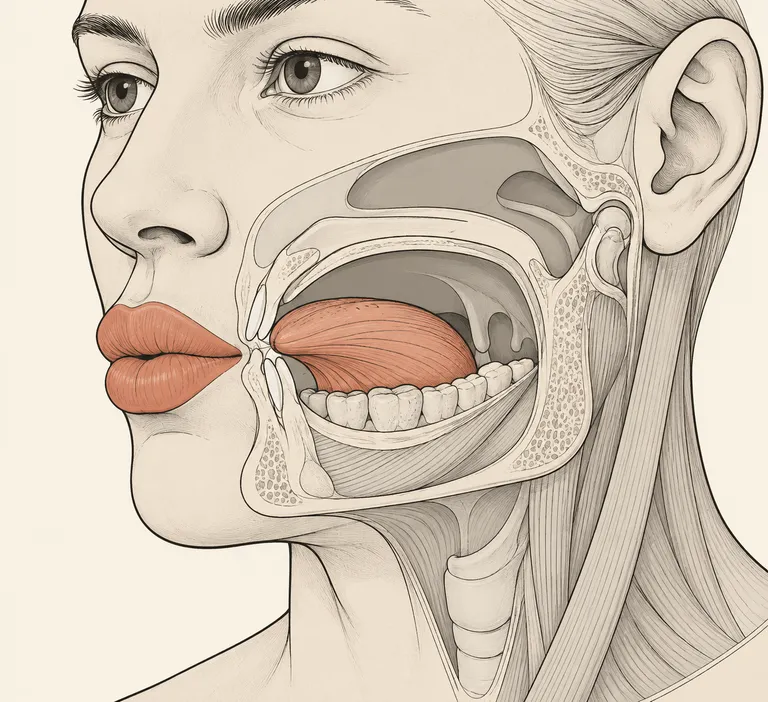
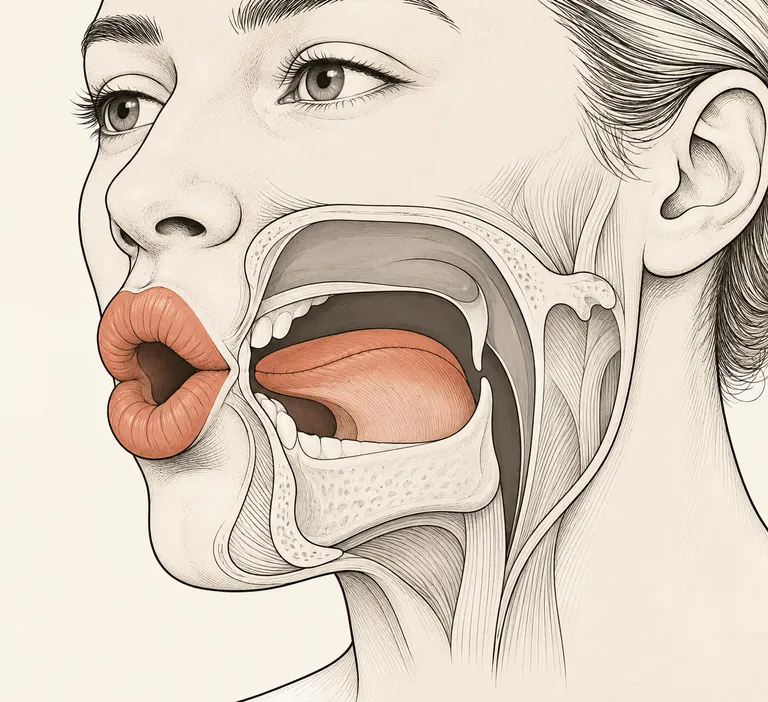
At rest, Italian speakers hold the jaw loosely closed with relaxed lips, but as soon as speech begins, the lips and jaw become quite active and expressive, especially rounding forward for vowels like 'o' and 'u'. The tongue tends to sit toward the front of the mouth.
The Italian comparison is being researched. Daily tips are available.
Rest positionJaw loosely closed, lips softly together, tongue resting toward the front of the mouth
Vowel articulationJaw dropped moderately, lips rounded and pushed forward for a back vowel, cheeks slightly engaged
Italian speech uses energetic, forward lip and jaw movement to give every vowel its full, clear quality.
How Italian moves
sourced
Italian is syllable-timed, so each syllable takes roughly the same amount of time and keeps its full vowel sound, unlike English, which stretches stressed syllables and shrinks unstressed ones into a quick schwa. This even, syllable-by-syllable beat gives Italian its rolling, musical rhythm, but it can clash with English's stress-timed pattern when the habit carries over.
Where Italian rests
sourced
At rest, Italian speakers hold the jaw loosely closed with relaxed lips, but as soon as speech begins, the lips and jaw become quite active and expressive, especially rounding forward for vowels like 'o' and 'u'. The tongue tends to sit toward the front of the mouth. Because Italian vowels never reduce to a mumbled schwa the way English ones often do, speakers keep full, clear vowel quality in every syllable, which calls for more precise, energetic mouth movement throughout a sentence. This gives Italian speech a lively, forward, melodic feel. When speaking English, this habit of giving every vowel full value can make unstressed English syllables sound too clear and disrupt English's natural rise-and-fall rhythm.
Standard Italian (based on educated Tuscan/broadcast norms); notes apply broadly, though Northern and Southern regional accents vary in vowel quality and intonation contours