This is an AI-generated research project, still being refined. It may contain errors. Reader ratings and feedback are coming soon. How this is made
For Japanese speakers
Your English has a Japanese shape. Here is
where.
When Japanese is spoken, the jaw stays fairly closed and moves only a little; you won't see the big vertical drops that happen in English vowels like in 'father'. Lips remain gently relaxed and mostly unrounded, even for the 'u' sound, which is made by lightly pressing the lips together rather than pushing them forward.
The Japanese comparison is being researched. Daily tips are available.
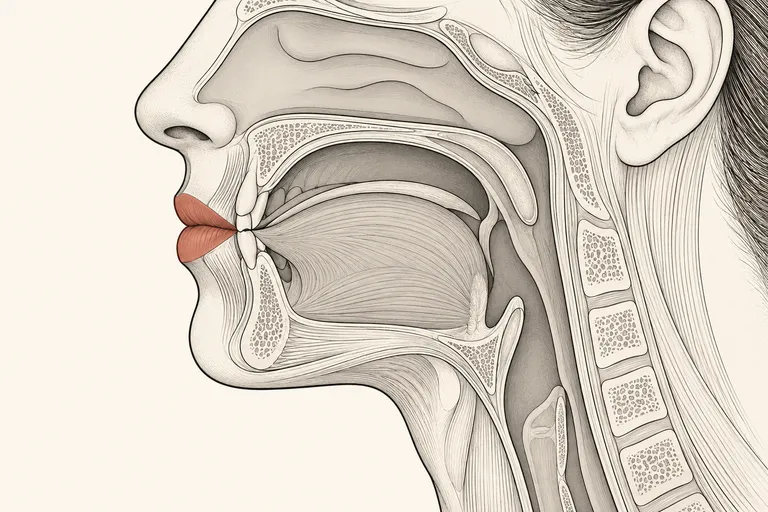
Neutral rest postureSide profile showing a closed, relaxed jaw, lips lightly together, and the tongue resting in a neutral mid-mouth position.
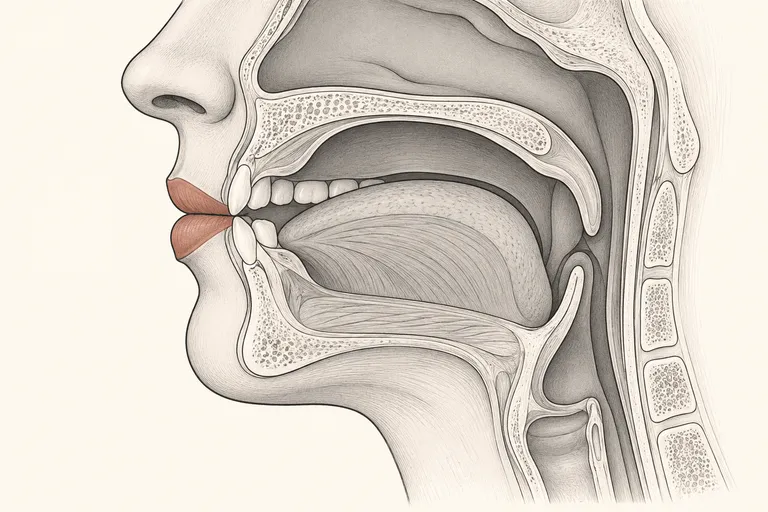
Vowel /a/ articulationMouth slightly open with only a small jaw drop, much less than the wide opening used for English 'father'.
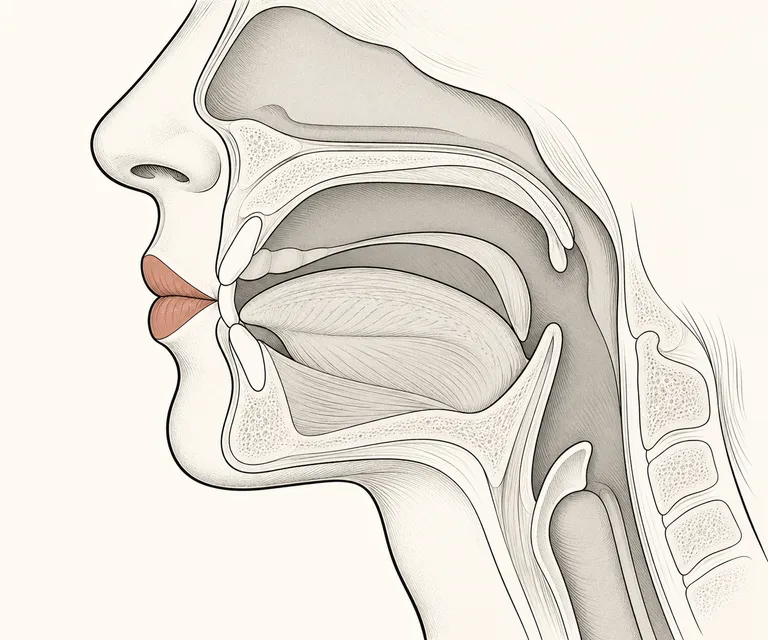
Vowel /u/ articulationLips lightly compressed toward each other rather than pushed forward and rounded, showing the difference from English rounded 'oo'.
Side-view illustration comparing Japanese neutral rest posture with two vowel articulations, highlighting minimal jaw movement and lip compression rather than rounding.
How Japanese moves
consensus
Japanese rhythm is mora-timed: each basic unit—usually a consonant plus a vowel, or a single vowel—takes up roughly the same amount of time, giving speech a steady, evenly-paced, almost staccato feel. This is different from English's stress-timed rhythm, where stressed syllables anchor the beat and the syllables in between get squeezed or stretched to fit.
Where Japanese rests
consensus
When Japanese is spoken, the jaw stays fairly closed and moves only a little; you won't see the big vertical drops that happen in English vowels like in 'father'. Lips remain gently relaxed and mostly unrounded, even for the 'u' sound, which is made by lightly pressing the lips together rather than pushing them forward. The tongue rests in a neutral, slightly forward position, and the cheeks stay still with very little muscular effort. There's no strong tension in the throat or voice box, so the overall voice quality sounds light, even, and unforced. Because each basic sound-unit (called a mora) gets roughly equal time, the mouth moves in small, steady, evenly-spaced motions rather than the stretchy, uneven movements typical of English.
Standard Japanese (Tokyo/Kantō dialect, hyōjungo); broadly applicable across mainland dialects, though pitch-accent patterns differ regionally (e.g., Kansai, Tōhoku).