This is an AI-generated research project, still being refined. It may contain errors. Reader ratings and feedback are coming soon. How this is made
For Korean speakers
Your English has a Korean shape. Here is
where.
Korean speech generally involves a bit more overall muscular effort than Japanese, especially around the throat and voice box, because Korean uses a three-way contrast among plain, tense, and aspirated consonants that requires precise control of airflow and vocal-fold tension. The jaw moves a moderate amount, lips can round more noticeably for back vowels, and the tongue tends to sit slightly further back at rest.
The Korean comparison is being researched. Daily tips are available.
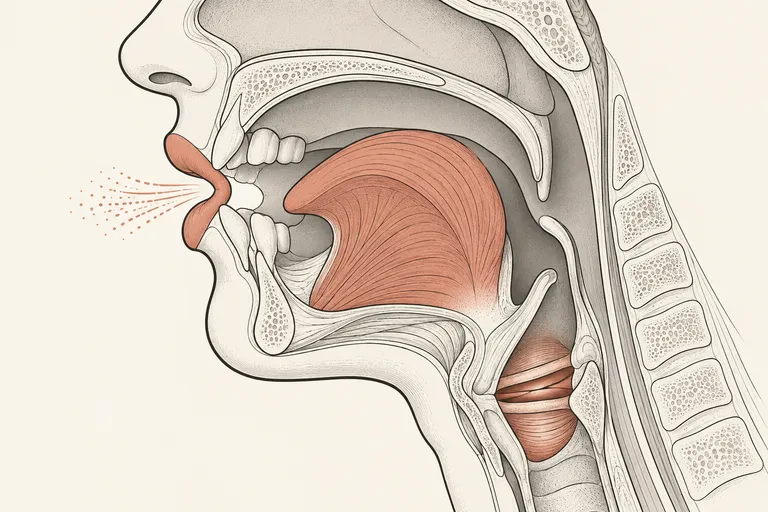
Neutral rest postureSide profile with a moderately open jaw, neutral lip position, and the tongue resting slightly further back than in Japanese.
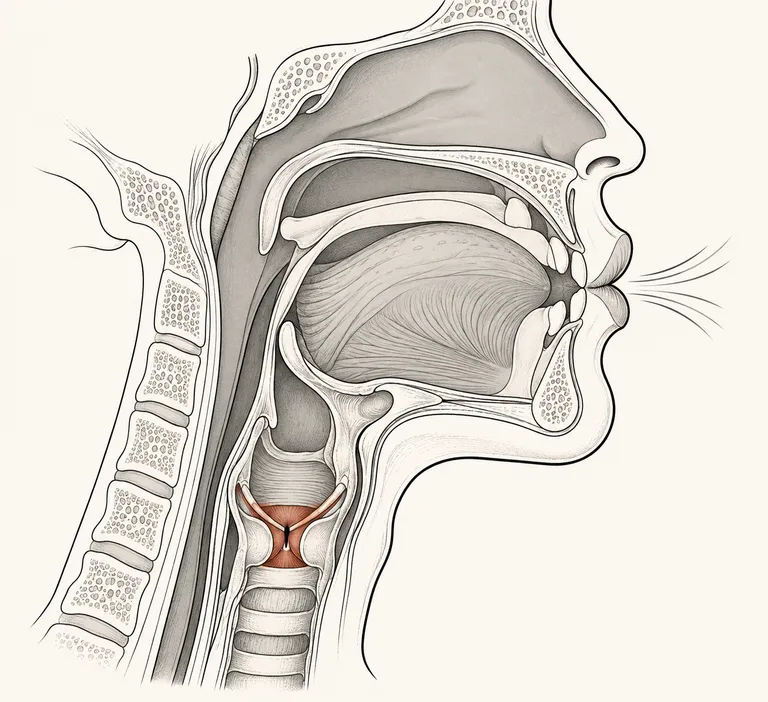
Tense consonant articulationLarynx area highlighted to show a brief, tight glottal closure and increased laryngeal tension typical of fortis (tense) consonants.
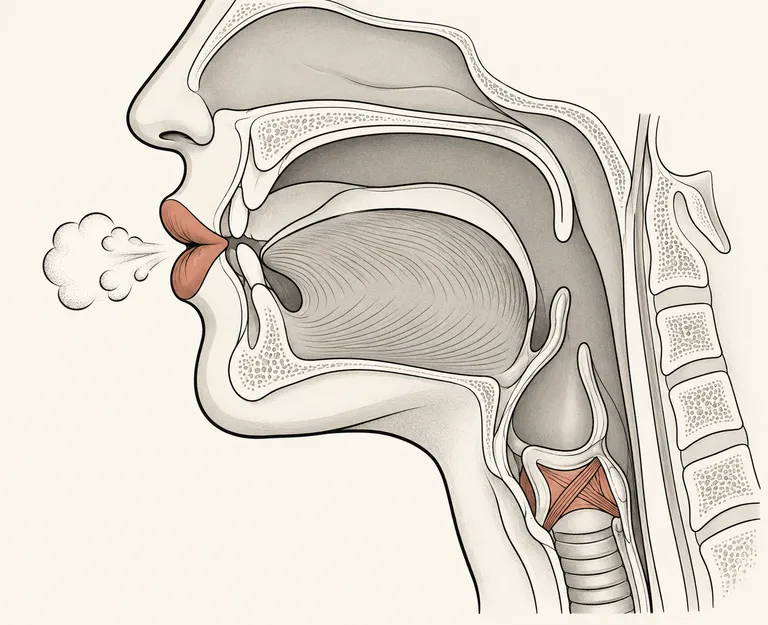
Aspirated consonant articulationSmall arrow or puff-of-air symbol near the lips showing the strong burst of air that follows aspirated consonants.
Two-panel side-view illustration contrasting Korean neutral rest posture with the laryngeal tension of tense consonants and the airflow burst of aspirated consonants.
How Korean moves
consensus
Korean is usually described as syllable-timed: syllables tend to take up similar amounts of time regardless of stress, since Korean has no strong lexical stress. Instead, rhythm is shaped by phrase-level pitch patterns rather than by syllable prominence, giving Korean a smoother, more even-paced flow than stress-timed English.
Where Korean rests
consensus
Korean speech generally involves a bit more overall muscular effort than Japanese, especially around the throat and voice box, because Korean uses a three-way contrast among plain, tense, and aspirated consonants that requires precise control of airflow and vocal-fold tension. The jaw moves a moderate amount, lips can round more noticeably for back vowels, and the tongue tends to sit slightly further back at rest. Cheeks stay fairly neutral, but speakers often feel extra tightness around the larynx when producing tense consonants, which involve a brief, tight closure of the throat. Voice quality is usually clear and even, with occasional short creaky bursts around those tense sounds. Overall tension is moderate — higher than in Japanese, but well within a comfortable, unstrained range.
Standard/Seoul Korean (pyojuneo); notes on differences from Gyeongsang and other regional varieties where a historical pitch-accent system survives.