This is an AI-generated research project, still being refined. It may contain errors. Reader ratings and feedback are coming soon. How this is made
For Tamil speakers
Your English has a Tamil shape. Here is
where.
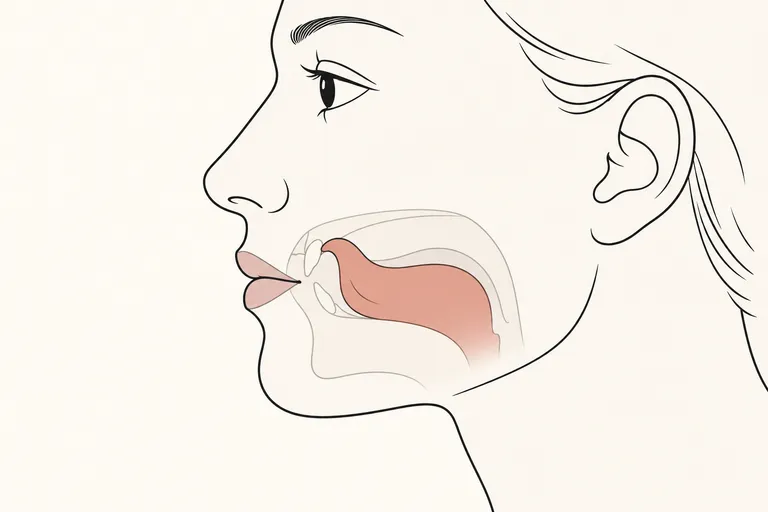
Tamil speakers typically rest with a moderately closed jaw and relaxed lips, not dropping the jaw as much as is common in American English. The tongue tip hovers near the upper teeth, ready to snap into one of two key positions: pressed against the back of the teeth for a dentalized stop, or curled back toward the roof of the mouth for a retroflex sound — these two shapes often stand in for English 'th' and English 't/d/l' sounds.
The Tamil comparison is being researched. Daily tips are available.
Rest positionJaw moderately closed, lips neutral, tongue tip resting near the upper teeth.
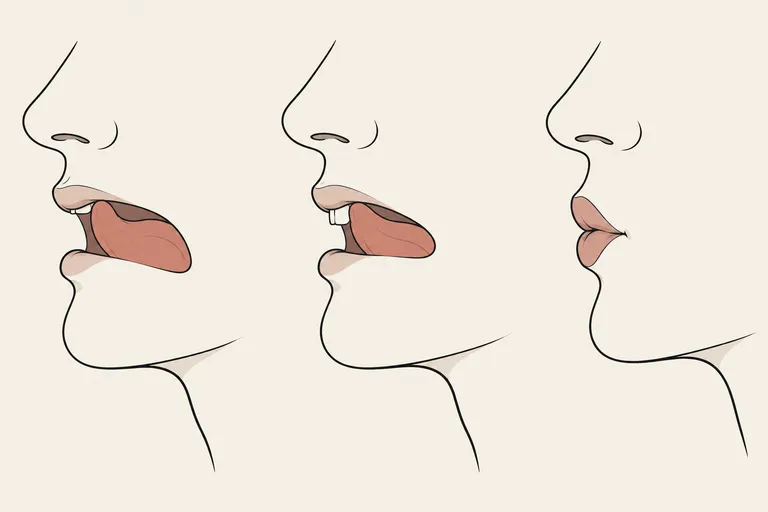
Retroflex curlTongue tip curled upward and back toward the hard palate, illustrating the retroflex consonant position that often replaces English alveolar sounds.
Dental contactTongue tip pressed against the back of the upper front teeth, illustrating the dentalized stop used in place of English th sounds.
Side-view sequence contrasting Tamil's retroflex tongue curl with its dental stop contact, the two tongue shapes that most often substitute for English alveolar and interdental sounds.
How Tamil moves
sourced
Tamil gives syllables fairly even timing rather than stretching stressed syllables and compressing unstressed ones as English does. This syllable-timed habit, combined with vowels that keep their full quality, can make English spoken with Tamil rhythm sound more evenly beat and less 'swallowed' between words than typical American speech.
Where Tamil rests
sourced
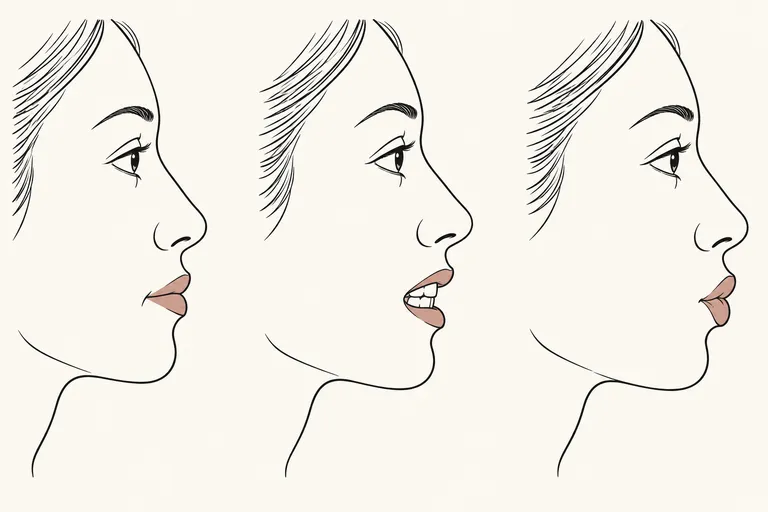
Tamil speakers typically rest with a moderately closed jaw and relaxed lips, not dropping the jaw as much as is common in American English. The tongue tip hovers near the upper teeth, ready to snap into one of two key positions: pressed against the back of the teeth for a dentalized stop, or curled back toward the roof of the mouth for a retroflex sound — these two shapes often stand in for English 'th' and English 't/d/l' sounds. Lips stay fairly neutral except when rounding for back vowels, and the same lip shape tends to cover both English v and w. Overall muscular tension is moderate but articulation at the tongue tip is crisp and deliberate.
Standard spoken Tamil as used in Tamil Nadu, India (Chennai-area norm); notes reflect colloquial pronunciation rather than literary/formal written Tamil