This is an AI-generated research project, still being refined. It may contain errors. Reader ratings and feedback are coming soon. How this is made
For Thai speakers
Your English has a Thai shape. Here is
where.
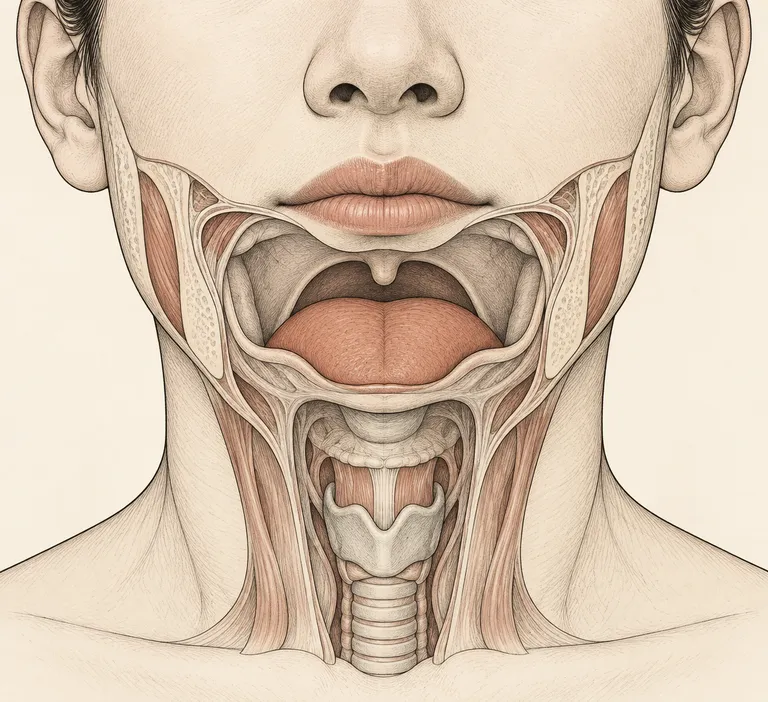
At rest, Thai speakers typically keep the jaw neutral and the lips fairly relaxed and less spread than in English, with the tongue sitting centrally and slightly low. What makes the Thai setting distinctive isn't the resting shape of the mouth but the larynx: it moves actively up and down to produce Thai's five tones, so pitch control is far more dynamic than in English, where pitch mainly signals emotion or sentence type rather than word meaning.
The Thai comparison is being researched. Daily tips are available.
Rest positionJaw neutral, lips relaxed and less spread than English, tongue resting central-low, larynx relaxed.
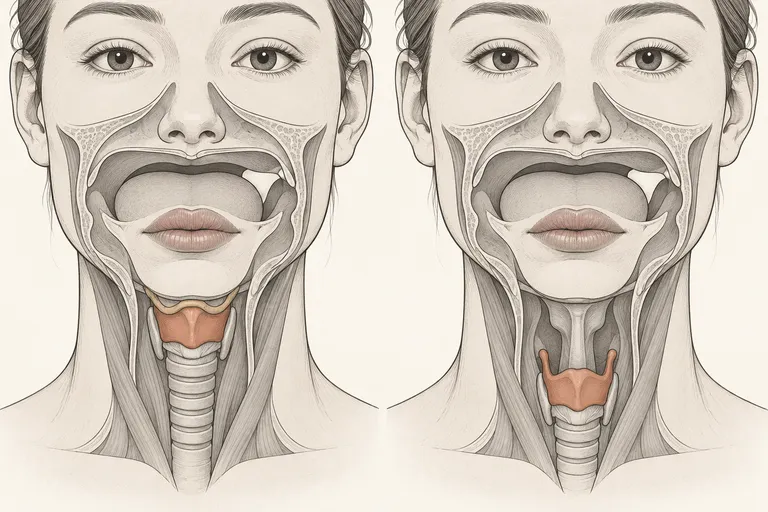
Producing a tone syllableLarynx height shifts noticeably, raised for a high tone or lowered for a low tone, while the mouth shape for the vowel itself stays constant.
Unreleased final stopLips or tongue close for a final consonant such as p, t, or k but stop short of a release burst, unlike English's audible release.
Thai speech uses active larynx movement to produce its five tones while keeping the rest of the mouth relatively compact and steady, and final consonants are typically closed off without the audible release common in English.
How Thai moves
sourced
Thai is syllable-timed, giving each syllable roughly equal duration and clarity rather than English's stress-timed pattern of stretching stressed syllables and squashing unstressed ones into schwa. Because Thai relies on tone rather than stress to organize words, Thai learners often bring their own default final or penultimate emphasis into English instead of using true English stress-driven rhythm.
Where Thai rests
sourced
At rest, Thai speakers typically keep the jaw neutral and the lips fairly relaxed and less spread than in English, with the tongue sitting centrally and slightly low. What makes the Thai setting distinctive isn't the resting shape of the mouth but the larynx: it moves actively up and down to produce Thai's five tones, so pitch control is far more dynamic than in English, where pitch mainly signals emotion or sentence type rather than word meaning. Final consonants are often closed off but not released, giving speech a clipped, held-back quality at the ends of syllables. Overall, the Thai mouth setting stays compact and even, while the throat and voice box do much more active, meaning-carrying work than English speakers are used to.
Standard Thai (Central Thai, Bangkok-based standard); notes on Northern, Northeastern (Isan), and Southern regional varieties not covered here.