This is an AI-generated research project, still being refined. It may contain errors. Reader ratings and feedback are coming soon. How this is made
For Ukrainian speakers
Your English has a Ukrainian shape. Here is
where.
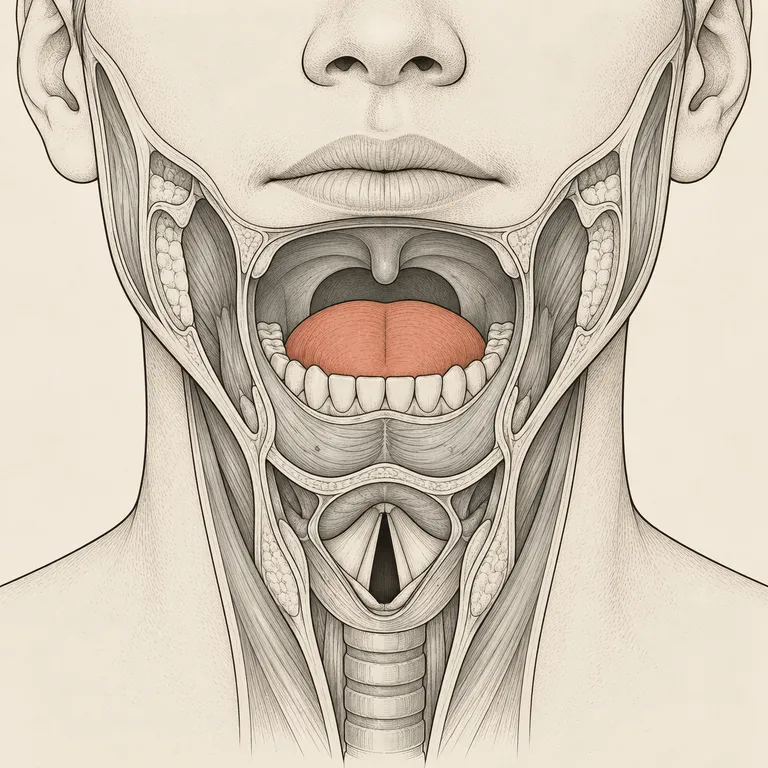
At rest, Ukrainian speakers tend to keep the jaw fairly closed and the tongue resting slightly forward and high, rather than dropping into the loose, central position typical of relaxed English speech. Lips stay neutral, becoming actively rounded only for back vowels.
The Ukrainian comparison is being researched. Daily tips are available.
Rest positionMouth closed, jaw relaxed but not dropped, lips neutral, tongue resting forward-high behind the lower teeth.
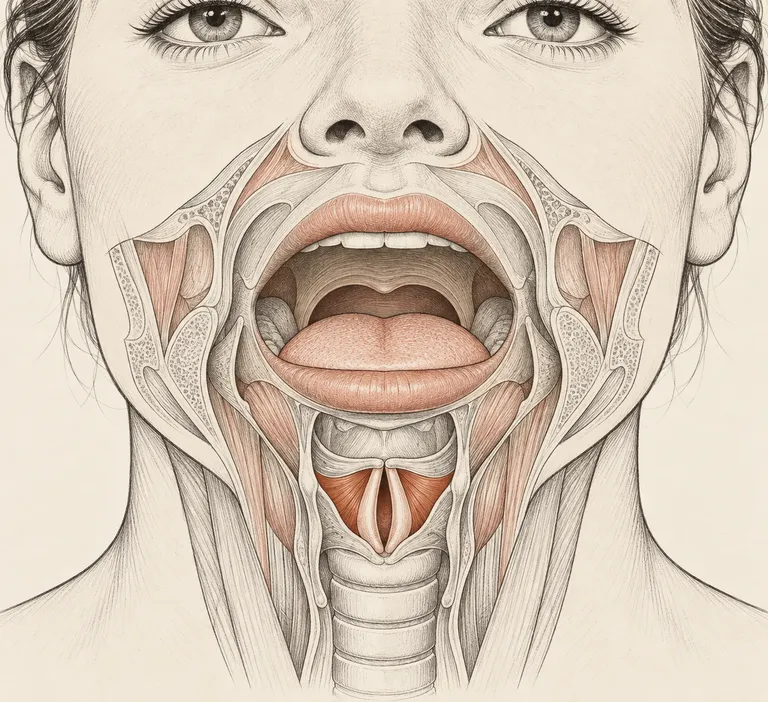
Producing г (breathy h)Slight glottal opening with breathy airflow and no back-of-tongue constriction, contrasting with a velar stop.
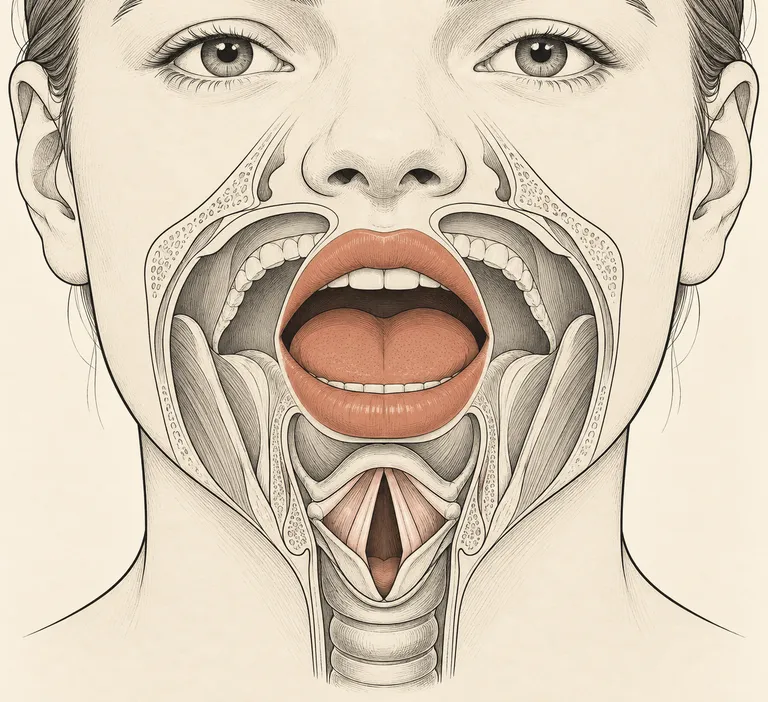
Unstressed vowelLips and tongue keep a full, undiminished vowel shape even though the syllable is unstressed, with no schwa collapse.
Ukrainian's resting mouth position is close and forward, vowels stay full even when unstressed, and the letter г is produced as a breathy glottal sound rather than a hard 'g'.
How Ukrainian moves
sourced
Ukrainian is syllable-timed, so each syllable tends to take roughly equal time regardless of stress, unlike English's stress-timed rhythm where stressed syllables anchor the beat and unstressed ones get squeezed and reduced. Stress is free and can land on any syllable, but it doesn't shrink nearby vowels into schwa, giving Ukrainian a steadier, more even-paced feel that can sound clipped when carried into English.
Where Ukrainian rests
sourced
At rest, Ukrainian speakers tend to keep the jaw fairly closed and the tongue resting slightly forward and high, rather than dropping into the loose, central position typical of relaxed English speech. Lips stay neutral, becoming actively rounded only for back vowels. Vowels keep their full, clear quality in every syllable, stressed or not, so the mouth never slips into the mushy sound English makes with unstressed vowels. Consonants are articulated crisply with distinct releases, and the Ukrainian 'h' sound is a soft, breathy puff from the throat rather than the hard back-of-tongue 'g' many learners expect from Slavic languages. Overall, the setting feels a bit more forward, a bit tighter, and more evenly energized across every syllable than the loose, up-and-down English mouth.
Standard Ukrainian (literary norm); regional dialects (western, central, southeastern) show minor vowel and consonant differences not covered here.