/t/, /tʰ/, /ɾ/as in top
You likely produce a fully aspirated or fully released tongue-tip stop in every position, including between vowels in words like 'city' or 'water', because Mandarin syllables don't have this quick, voiced in-between…
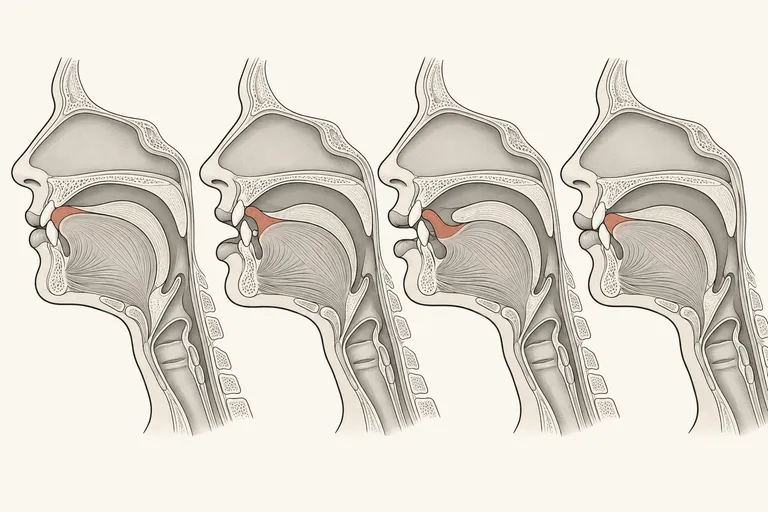
What you probably do
You likely produce a fully aspirated or fully released tongue-tip stop in every position, including between vowels in words like 'city' or 'water', because Mandarin syllables don't have this quick, voiced in-between version. At the end of words like 'bit' or 'button', you may drop the /t/ altogether or add a small vowel after it, since Mandarin doesn't allow syllables to end in oral stops.
How natives do it
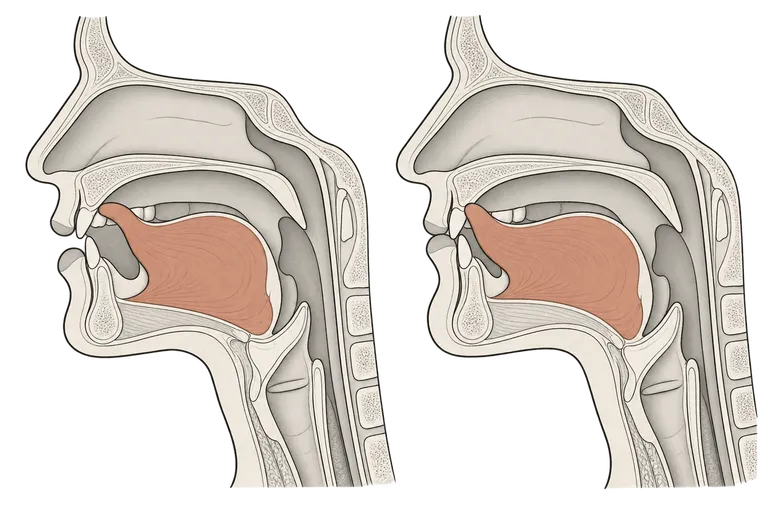
Americans turn /t/ into a fast, light tongue-tap between vowels, almost like a quick 'd', so 'city' sounds closer to 'siddy'. At the end of a word they usually just hold the tongue-tip closure briefly or release it very softly, without any extra vowel or a full aspirated burst.
Why it matters
Skipping the flap makes mid-word /t/ sound stiff and overly formal, while dropping or vowel-izing final /t/ can blur distinctions like 'bit' versus 'bid'. Learning both the flap and the light final stop will make your rhythm and word endings sound much more natural.
Hear the difference
Words this touches
Mandarin Chinese speakers often substitute /t, tʰ/.
How the mouth differs
Mandarin's t/tʰ pair matches English aspirated word-initial /t/ reasonably well, but English also neutralizes /t/ to a quick voiced tap between vowels ('city', 'water') and frequently drops or glottalizes it in codas ('button', syllable-final /t/ with no following vowel). Since Mandarin never ends syllables in oral stops, learners tend to over-articulate a full, released /t/ everywhere, skipping the flap and sometimes dropping or vowel-izing final /t/.
Listen for the pattern
A fully released, crisp /t/ in words like 'better' or 'city' sounds overly formal or foreign to American ears, who expect a fast, almost /d/-like tap there; meanwhile deleting final /t/ in words like 'bit' can make it sound like 'bi' or merge with voiced-final words like 'bid'.
Reader ratings and feedback are coming soon.
Sources (2)
- Common Accent Features of Mandarin Chinese Speakers in English — 2026
- Mandarin speakers frequently soften or drop final consonants (e.g., 'seat' becoming 'see') because Mandarin syllables rarely end in stops.
- An extra schwa vowel (/ə/) often appears at the end of English words, creating an unnatural two-syllable rhythm where English requires a single stressed syllable.
- Consonant clusters common in English (e.g., 'texts', 'school') are simplified or omitted by Mandarin speakers due to the language's avoidance of stacked consonants.
- Wells, J.C. (1982). Accents of English.