/ð/as in this
You likely replace this sound with /d/ (especially at the start of common words like 'the' or 'this') or with /z/ elsewhere, since Mandarin has no voiced interdental fricative and these are the closest familiar voiced…
What you probably do
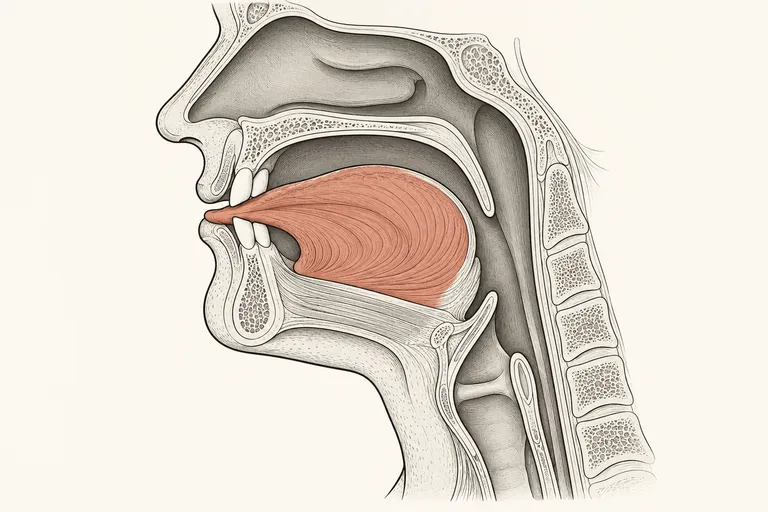
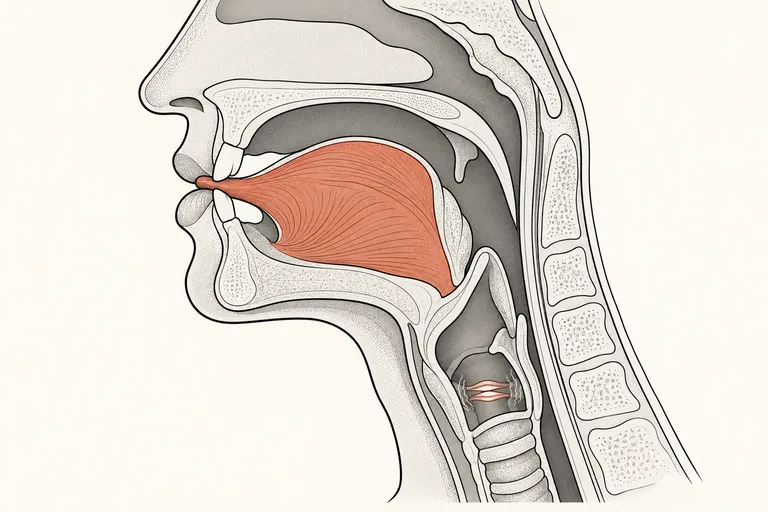
You likely replace this sound with /d/ (especially at the start of common words like 'the' or 'this') or with /z/ elsewhere, since Mandarin has no voiced interdental fricative and these are the closest familiar voiced sounds in your native inventory.
How natives do it
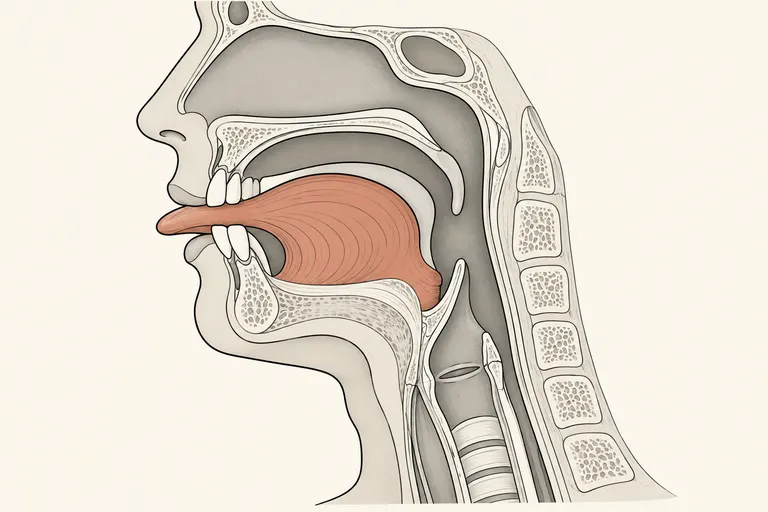
Native speakers place the tongue tip lightly between the upper and lower front teeth, just as for the voiceless version, but turn the voice on so a gentle buzz comes through — the contact is light, not a firm stop like /d/, and the airflow is continuous rather than released in a single burst.
Why it matters
Because 'the', 'this', and 'that' are some of the most frequent words in English, a /d/ or /z/ substitution here is highly noticeable and can make your accent stand out even when meaning is still clear. Practicing the light tongue-between-teeth position in these everyday words pays off quickly.
Hear the difference
Words this touches
Mandarin Chinese speakers often substitute /z, d/.
How the mouth differs
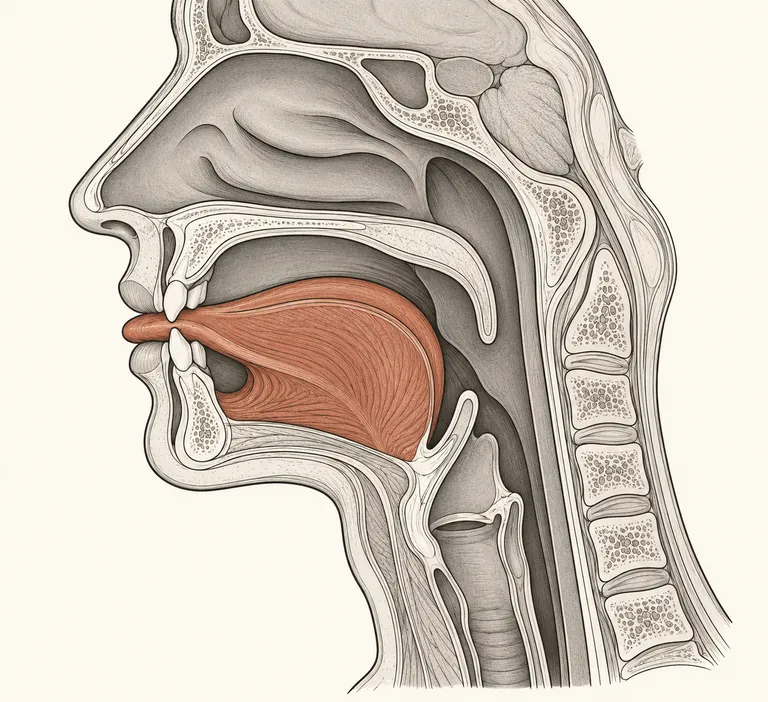
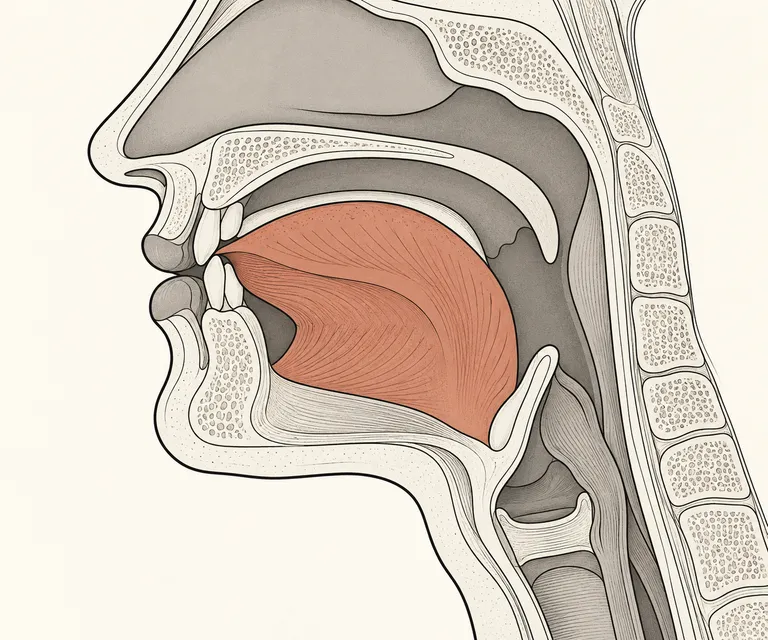
Like its voiceless partner θ, Mandarin has no voiced dental or interdental fricative. Learners commonly substitute /d/ (especially word-initially in very frequent function words like 'the' and 'this') or /z/ (especially word-medially or finally), since both are familiar voiced sounds, rather than placing the tongue between the teeth with voicing.
Listen for the pattern
Because 'the', 'this', and 'that' are extremely high-frequency words, a /d/ or /z/ substitution here is one of the most immediately noticeable accent markers to American listeners, even though it rarely blocks understanding in context.
Practise it
Tell Then from Den
sourced- Listen to pairs of words: then/den, though/dough, breathe/breed.
- For each pair, decide whether the key sound is a soft buzzing hiss (ð) or a harder stop/sibilant (d, z).
- Say 'A' or 'B' out loud, or write it down, for each pair you hear.
- Check your answers against the answer key.
- Replay any pair you missed three times, listening only to that one consonant.
- Redo the whole set until you score at least 9 out of 10.
Success check: You can reliably distinguish ð from d/z even in random order, without needing to see the spelling.
Why this works. Presenting minimal pairs like then/den and though/dough in randomized order trains the learner's phonemic decision boundary between the voiced dental fricative ð and the d/z/v sounds Hungarian substitutes for it; sharpening perceptual discrimination first improves self-monitoring accuracy during later production practice.
Sources (1)
- Distinguishing universal and language-dependent levels of speech perception: Evidence from Japanese listeners' perception of English “l” and “r” — Virginia A. Mann, 1986
- Japanese listeners successfully discriminate the acoustic properties of English /l/ and /r/ when presented with non-English contrasts, ruling out a universal hearing deficit.
- The primary source of error is language-dependent categorization, where listeners map English sounds onto their existing L1 phonological categories (e.g., classifying both as liquids).
- Performance improves significantly when the acoustic contrast between /l/ and /r/ is exaggerated or presented in contexts that highlight their distinctiveness.
Build ð One Step at a Time
consensus- Relax your jaw and let your mouth open slightly.
- Slowly stick your tongue tip out between your teeth, same as for θ, and pause.
- Turn on your voice — hum gently — while keeping the tongue tip in that same spot.
- Let a light, steady buzz flow over your tongue tip along with a small stream of air.
- Hold that voiced buzz for two full seconds.
- Slowly pull your tongue back behind your teeth while the buzz fades.
- Repeat all the steps slightly faster until it feels like one smooth motion.
- Attach it to the start of 'this': hold the ð briefly, then finish the word.
Success check: You should feel your throat vibrating while your tongue tip is between your teeth, producing a soft buzz rather than a silent hiss or a stop.
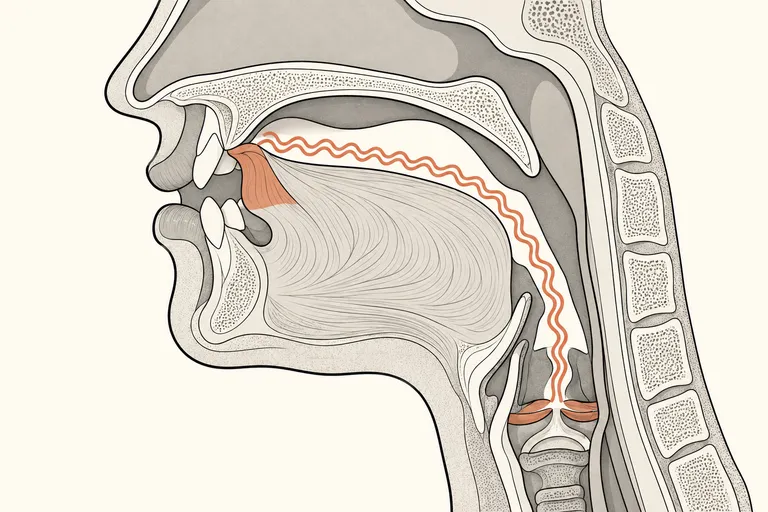
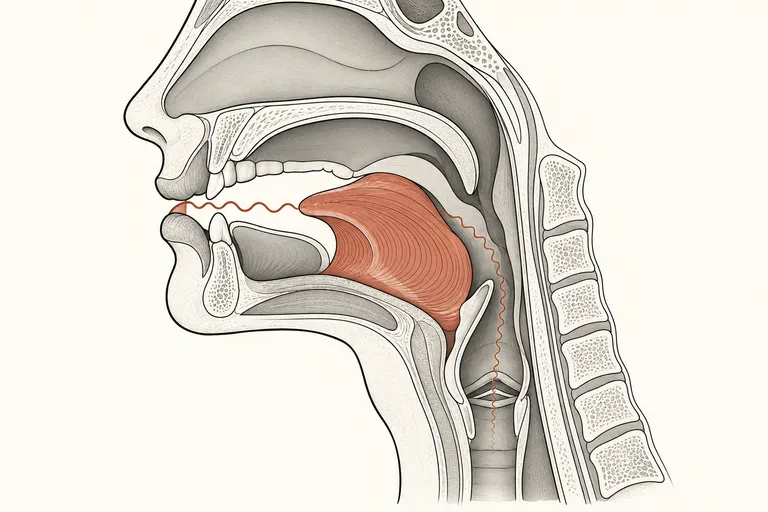
Why this works. Building the gesture step by step — protrusion, then adding continuous voicing, then retraction — lets the learner isolate the one component (vocal fold vibration) that turns the already-practiced θ gesture into ð, before reassembling the whole motion at normal speed.
Sources (1)
- Ladefoged, P. & Johnson, K. (2015). A Course in Phonetics.
Practice ð in a Full Sentence
sourced- Read this sentence slowly: 'This is the mother of that other brother, though he's leaving.'
- Exaggerate the tongue-tip-between-teeth gesture on every ð word, keeping your voice buzzing.
- Record yourself reading it slowly and carefully.
- Play it back and mark any ð that sounded like a hard 'd' or a 'z' hiss instead.
- Repeat the sentence three more times, gradually speeding up while watching your tongue in the mirror.
- Read it once more at natural conversational speed.
Success check: Every ð should show a brief tongue-tip appearance with a continuous buzz, even when you're speaking at normal speed.
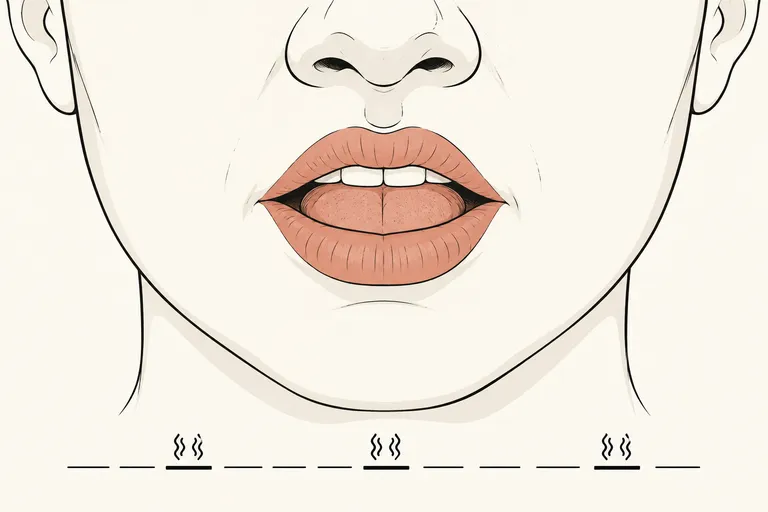
Why this works. Because ð appears constantly in high-frequency function words, embedding it in a full sentence forces repeated, rapid re-execution of the tongue-protrusion-plus-buzz gesture amid the coarticulatory pressure of neighboring sounds, testing whether the new gesture has become automatic rather than a careful, isolated performance.
Sources (1)
- Training the pronunciation of L2 vowels under different conditions: the use of non-lexical materials and masking noise. — Joan C Mora, Mireia Ortega, Ingrid Mora-Plaza et al., 2022
- Non-lexical training materials produced greater pronunciation improvements for L2 learners compared to lexical (word-based) materials.
- Masking noise during training hindered performance specifically for participants using non-lexical stimuli, but did not negatively affect those using words.
- Training-induced gains in vowel production were more pronounced when vowels appeared in sentences than when elicited in isolated words.
Buzz It Big, Then Bring It Back
sourced- Say 'this' with your tongue tip pushed far out between your teeth and an extra-loud, extra-long buzz.
- Hold the exaggerated buzz for two full seconds before finishing the word.
- Now say 'this' again with the tongue only slightly poking out, closer to natural speech, but keep the buzz clearly audible.
- Compare: both versions should buzz, just with different amounts of visible tongue and length.
- Repeat the big-then-small pattern with 'that', 'mother', and 'though'.
- Finish with five natural-speed repetitions of all four words.
Success check: Your natural-speed ð should still show a small tongue-tip peek and a clear buzz — a smaller version of the exaggerated one, not a collapse into 'd' or 'z'.
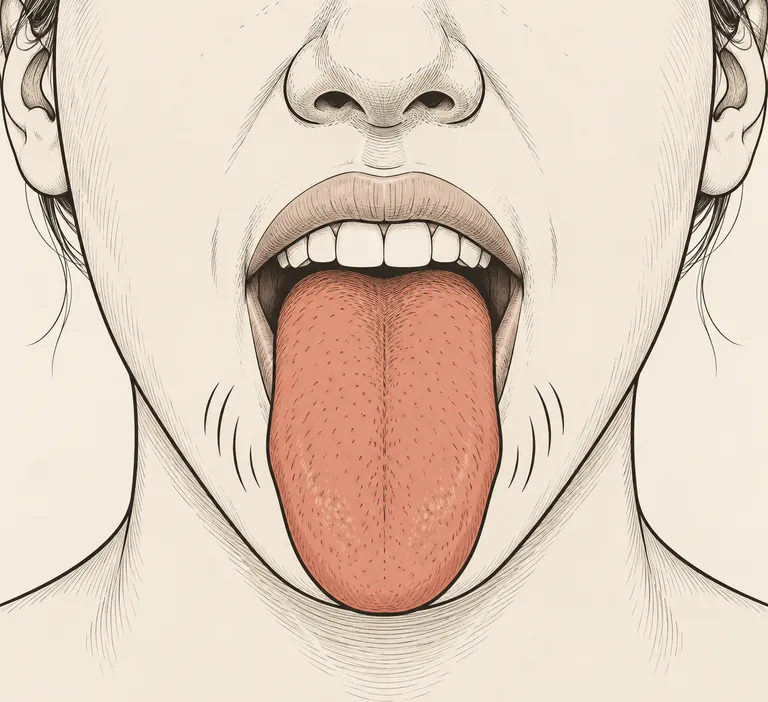

Why this works. Overshooting both the tongue protrusion and the voiced buzz beyond what natural speech requires exaggerates the contrast between ð and the learner's habitual d/z substitutes, strengthening the new perceptual-motor category before it is dialed back to a natural, subtler articulation, consistent with findings that acoustic exaggeration during training improves category formation.
Sources (1)
- The Role of Temporal Acoustic Exaggeration in High Variability Phonetic Training: A Behavioral and ERP Study — Bing Cheng, Xiaojuan Zhang, Siying Fan et al., 2019
- The HVPT-E group showed greater improvement in natural word identification performance compared to the standard HVPT group.
- Training with temporal acoustic exaggeration induced native-like categorical perception based on spectral cues.
- MMN responses demonstrated training-induced changes at pre-attentive neural levels, suggesting enhanced brain plasticity.
Say the Pairs, Feel the Buzz
sourced- In the mirror, say 'then', watching your tongue tip rest lightly between your teeth while your voice buzzes.
- Now say 'den' right after, pulling the tongue back to make a full stop behind your teeth.
- Alternate: then-den, then-den, five times, exaggerating the tongue position switch.
- Repeat with though-dough and breathe-breed.
- Record all three pairs.
- Play back and confirm the ð words show a continuous buzz and visible tongue-tip peek, while the d/z words don't.
Success check: You should feel a steady vibration on your tongue tip for ð words, versus a quick stop or a hiss from further back on the d/z words.
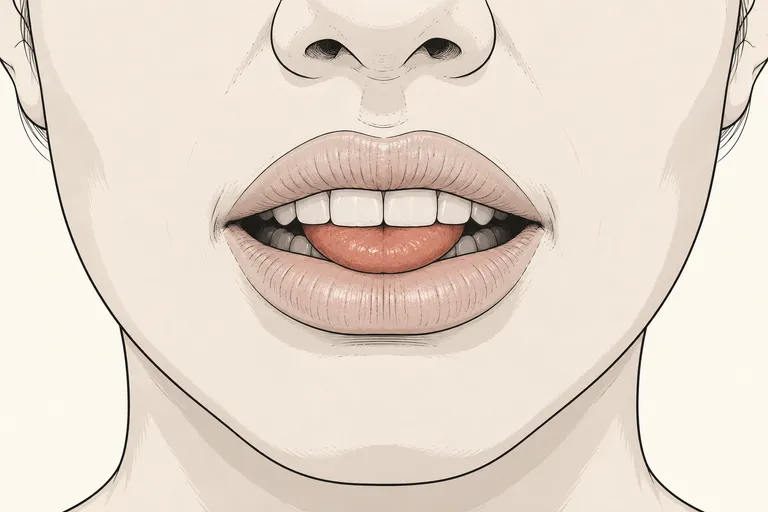

Why this works. Producing minimal pairs back-to-back forces a rapid articulatory switch between the tongue-protruded continuous buzz of ð and the retracted stop or fricative (d/z) already automatized in Hungarian, strengthening the motor contrast needed to keep the two categories separate in running speech.
Sources (1)
- Distinguishing universal and language-dependent levels of speech perception: Evidence from Japanese listeners' perception of English “l” and “r” — Virginia A. Mann, 1986
- Japanese listeners successfully discriminate the acoustic properties of English /l/ and /r/ when presented with non-English contrasts, ruling out a universal hearing deficit.
- The primary source of error is language-dependent categorization, where listeners map English sounds onto their existing L1 phonological categories (e.g., classifying both as liquids).
- Performance improves significantly when the acoustic contrast between /l/ and /r/ is exaggerated or presented in contexts that highlight their distinctiveness.
Push Your 'd' Forward Into ð
consensus- Say a crisp 'd' and notice your tongue tip touching just behind your top front teeth, with your voice buzzing.
- Say 'd' again, letting the tongue tip slide a bit further forward, to the back of your top teeth.
- Push just a little more so the tongue tip peeks out between your teeth.
- Instead of stopping the airflow completely like 'd' does, let the air and voice buzz continuously over the tongue tip.
- Practice the transition: 'd... d... voiced-th... voiced-th...', feeling the tongue creep forward each time.
- Attach the final voiced position to the word 'this', starting from the 'd' spot and sliding forward each rep.
Success check: You should feel the tongue slide forward from your familiar 'd' spot, ending with the tip lightly between your teeth and a continuous buzz instead of a quick stop.
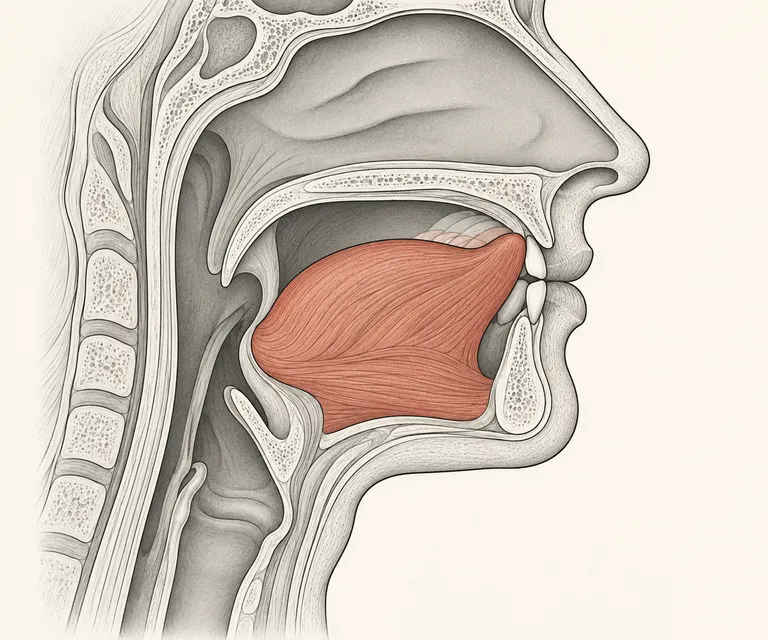
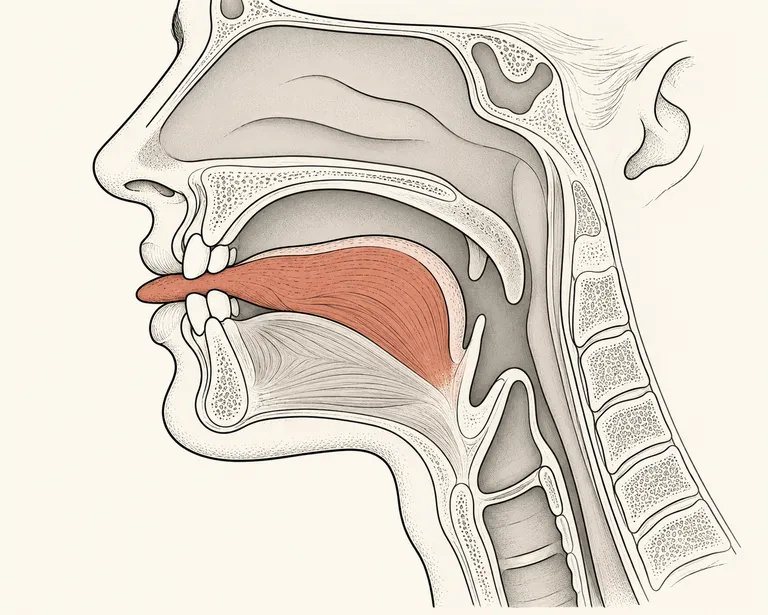
Why this works. ð recruits the same tongue-tip fronting and vocal-fold-vibration muscles already used for the native voiced alveolar stop 'd'; sliding the familiar 'd' tongue-tip gesture a few millimeters further forward past the alveolar ridge, and releasing it as a continuous buzz instead of a stop, repurposes an existing motor-voicing program instead of building an entirely new one.
Sources (1)
- Celce-Murcia, M., Brinton, D., & Goodwin, J. (2010). Teaching Pronunciation.
Reader ratings and feedback are coming soon.
Sources (2)
- Exploring Phonetic Differences and Cross-Linguistic Influences: A Comparative Study of English and Mandarin Chinese Pronunciation Patterns — 2024
- Mandarin speakers frequently substitute non-existent English sounds like /θ/ and /ð/ with /s/ or /z/, and struggle with voiced consonants due to lack of corresponding phonemes in their native system.
- English speakers often confuse Mandarin tones (particularly 2nd and 3rd) and mispronounce back vowels because English lacks a tonal structure and specific vowel inventory.
- Approximately 70% of surveyed learners identified phoneme differences as the main barrier to effective pronunciation in their target language.
- Wells, J.C. (1982). Accents of English.