Linking
You may insert a small glottal stop or pause before English words that begin with a vowel, especially after a word ending in a consonant, since Hungarian habitually marks these word boundaries this way.
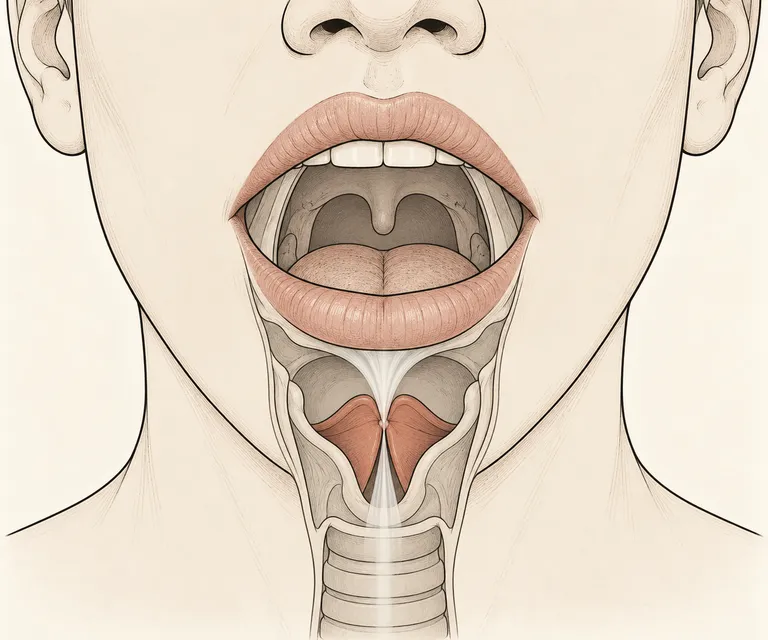

What you probably do
You may insert a small glottal stop or pause before English words that begin with a vowel, especially after a word ending in a consonant, since Hungarian habitually marks these word boundaries this way.
How natives do it
Americans glide the final consonant of one word directly into the vowel that starts the next word with no break at all, so 'turn it off' sounds almost like one continuous stretch of sound rather than three separate words.
Why it matters
Because connected English relies heavily on this smooth linking for its characteristic flow, adding extra glottal breaks between words can make speech sound stilted and overly segmented, even when every individual word is pronounced correctly.
How the mouth differs
Hungarian speakers often insert a light glottal stop before a word that begins with a vowel, keeping word boundaries audibly separate; English instead links a final consonant directly into the next word's initial vowel with no break, and can even insert a small linking glide (like an intrusive r) between two vowels across a word boundary.
Listen for the pattern
Inserting glottal stops between words, as Hungarian habits encourage, makes connected English speech sound choppy and overly segmented to Americans, who expect words to flow together smoothly within a phrase.
Try these sentences
- Turn it off and check it out.The final consonant of one word links smoothly into the vowel starting the next word ('turn-it', 'check-it').
- I saw a red apple.An intrusive r-like glide can appear between 'saw' and 'a' in fast, connected American speech.
Reader ratings and feedback are coming soon.
Sources (1)
- Wells, J.C. (1982). Accents of English.