/k/, /kʰ/as in cat
You probably pronounce English 'k' just like Spanish 'k' — sealing the back of your tongue against the soft palate and releasing cleanly with no extra air — because that is the only version of this sound that exists in…
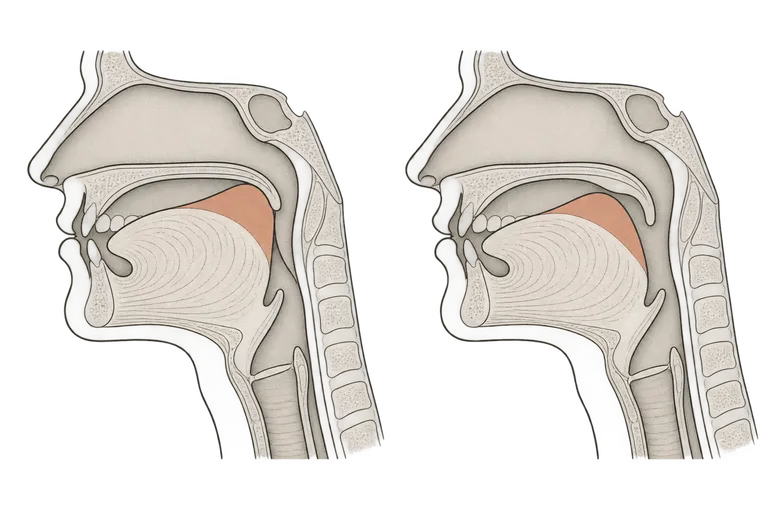
What you probably do
You probably pronounce English 'k' just like Spanish 'k' — sealing the back of your tongue against the soft palate and releasing cleanly with no extra air — because that is the only version of this sound that exists in Spanish, in words like 'casa' or 'cosa'.
How natives do it
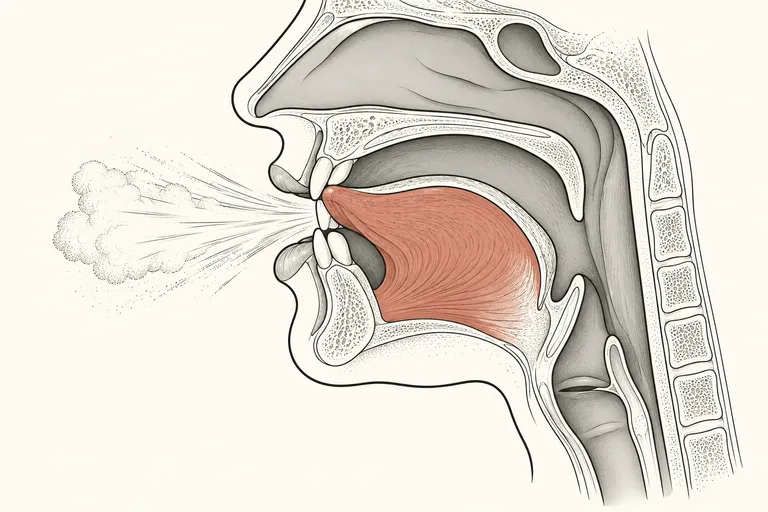
At the beginning of a stressed syllable, Americans release with a strong, audible puff of air before the vowel starts, as in 'cat' or 'key' — you can check this by holding a tissue near your mouth, which should flutter — but not after 's', as in 'school', or at the end of a word like 'back'.
Why it matters
Because English relies on aspiration, not just voicing, to separate 'k' from 'g', skipping this puff of air can make 'cap' sound confusingly close to 'gap' or 'came' close to 'game' to American listeners, making this a genuinely useful habit to build.
Hear the difference
Words this touches
Spanish speakers often substitute /k/.
How the mouth differs
Spanish k is always unaspirated, releasing cleanly with no burst of air; American English k is strongly aspirated at the start of a stressed syllable, releasing a clear puff of air before the vowel, though it is unaspirated after s (as in 'school') or unreleased in coda position.
Listen for the pattern
An unaspirated k at the start of a stressed syllable can be perceived by American listeners as closer to g, since aspiration is a primary cue distinguishing these two sounds in English, risking confusion between pairs like 'cap' and 'gap' or 'came' and 'game'.
Reader ratings and feedback are coming soon.
Sources (1)
- Wells, J.C. (1982). Accents of English.